

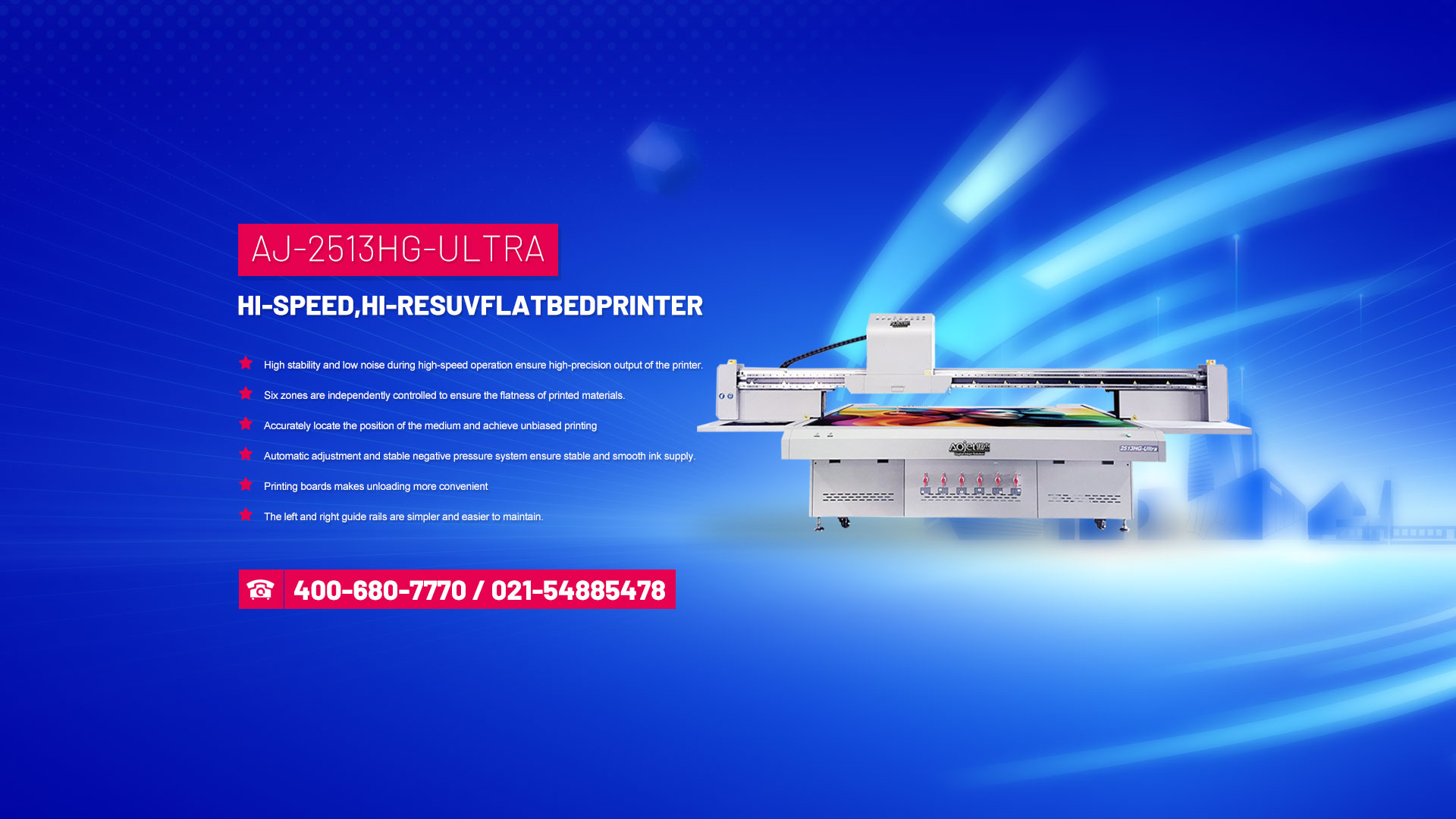







Currently, 80% of flatbed printer manufacturers use modified Epson inkjet printers from Japan, and most of the modified machines from these manufacturers retain Epson's original nozzles. Because it is indeed a good thing, the nozzle is independent and easy to clean. If you encounter someone you don't know, once it gets blocked, there is no way to use it. In fact, as long as you do a good job in daily nozzle maintenance, using it for a few years is not enough. Of course, good ink is also very necessary.
Let's analyze the reasons for nozzle blockage in universal flatbed printers here:
1. The nozzles of a universal flatbed printer are very precise. There are generally 1440 nozzles and 1048 nozzles on an alloy plate of less than 2 inches. These nozzles are evenly arranged and cannot be seen by the naked eye, so their minimum ink droplets are very small. Generally, the minimum ink droplet for machines above A2 (including A2) is 3.5 microliters, and for machines below A3 (including A3) it is 1.5 microliters. Simply put, it is only a few tens of times smaller than a human hair. Therefore, if the volume of impurities in the printer ink is larger than the size of the ink head, it is obvious that these inks will clog the ink head during operation, which is one of the reasons for ink head clogging in inkjet printers.
2. Long term unused flatbed printers can cause ink near the ink head to harden due to weathering, which can also lead to clogging of the flatbed printer ink head. So most manufacturers will say that the machine should be turned on once a day even when it is not working, because the nozzle will automatically detect it when it is turned on, which greatly reduces the possibility of weathering.
3. When the cleaning is not thorough enough, using different inks can also cause nozzle clogging. The molecular structure of different brands of ink is different, and thorough cleaning is not enough. When two types of ink are mixed together, the ink droplets directly exceed 3.5 microliters, which directly leads to nozzle blockage.
4. Filter clogging: Long term use of inferior ink can block larger particles and harmful solvents in the ink in front of the filter, which can clog over time.
5. Bacterial putrefactive plug: This type of plug often occurs when the temperature is above 20 degrees Celsius, causing a large number of bacteria in the ink to multiply, resulting in ink spoilage and the appearance of flocculent putrefactive substances inside the nozzle.
6. Electrical plug: Some printer heads are equipped with ink or ink cartridge chip electrical performance testing. When non-standard ink or chips are detected, the ink valve will be closed to varying degrees, preventing ink from passing through the head normally. This type of plug is called a false plug.
7. Air blockage: Some inks have poor defoaming performance and may produce bubbles in the ink. Once the bubbles enter the nozzle, they are difficult to come out, causing air blockage.
8. Structural blockage: Due to improper treatment of water during the ink manufacturing process, the water is too strong. If used for a long time, the mineralized substances in the water will scale on the nozzle, causing the effective diameter of the nozzle to decrease. This situation often starts with the printed product having patterns.